Skip to content
ınfyaıAcademyby Board Infinity
Menu
New Roles and skills for 2031: our October 2026 research

Your degree, upgraded to build.

InfyAI runs selective Tech × Business × AI tracks inside partner universities’ on-campus B.Tech, MBA and BBA degrees. Students learn to specify, build, verify and own real work with AI, and earn before they graduate.

Inside your degree, on your campus.A quarter to two-fifths of the credits, taught in studios on campus. Your university awards the degree.
Paid work before graduation.A consulting sprint for a real business, a venture that earns its first rupee, and an industry semester.
Every skill, tested twice.Once with every AI tool you can find. Once with none, and an oral defence.
01 Why now

The entry rung is splitting.

Hiring in India is steady but more selective. One side of the first job is shrinking and repricing. The other pays a premium for people who can make AI do useful work, and prove it.

6,000

forward-deployed engineers Infosys plans to build, to sit with clients and take AI from pilot to production.

Infosys commentary, 2026, as reported by Deccan Herald
64%

of new roles at India’s global capability centres need AI, data or automation skills. The 0–3-year band is growing fastest, at 18% a year.

foundit Insights Tracker, via Business Today, 1 July 2026
37%

of 591 openings across 59 AI-era roles we studied were open to candidates with zero to one year of experience. The door is open, to the right profile.

InfyAI role and skills study, October 2026

Shrinking and repricing

  • Outbound prospecting (SDR, BDR)
  • Tier-1 support and data entry
  • Volume content and MIS reporting
  • Manual testing and mass-tier coding

Where hiring moves

  • Forward-deployed and implementation engineering
  • Automation and agent operations
  • GTM engineering and technical selling
  • Analysis that changes a decision
02 Voices on the future of work

The people building AI agree on one thing.

Ask the people who build AI, and the people who hire at scale, what the next graduate needs. The answers converge: not fewer people, but people who direct the machine, check it and own the result.

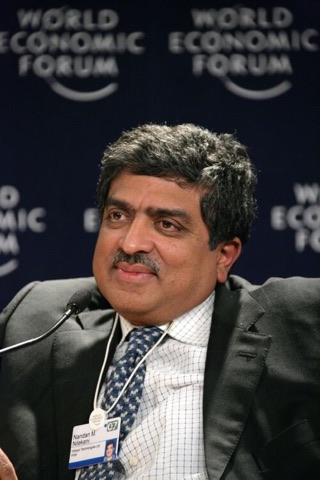
Portrait of Nandan Nilekani
Photo: World Economic Forum, CC BY-SA 2.0
Nandan Nilekani
Co-founder and chairman, Infosys
India’s edge is applying AI to real problems, not building chips. Forecasts of mass job loss are overstated; small businesses that use AI will create jobs at scale.
Bloomberg New Economy Forum, October 2026, and NCAER India Policy Forum, August 2026
One industry, deeplySource ↗
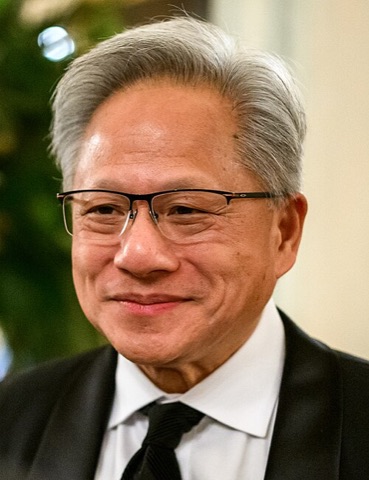
Portrait of Jensen Huang
Photo: The White House, public domain
Jensen Huang
Founder and CEO, NVIDIA
Every job will be affected. The risk is not losing your job to AI, but to someone who uses AI well.
Milken Institute Global Conference, May 2025
AI-augmented workSource ↗
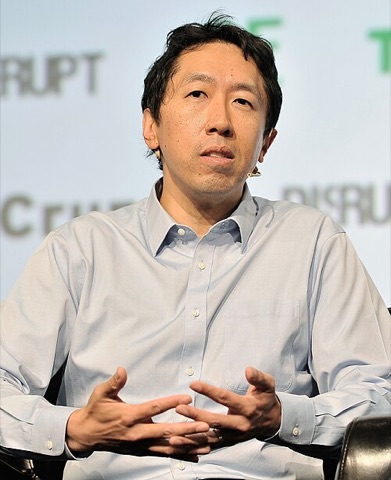
Portrait of Andrew Ng
Photo: TechCrunch, CC BY 2.0
Andrew Ng
Founder, DeepLearning.AI
AI can do perhaps a third of many jobs, so the job stays. The person who uses AI well will replace the one who doesn’t.
World Economic Forum, Davos, January 2026
Fast with AISource ↗
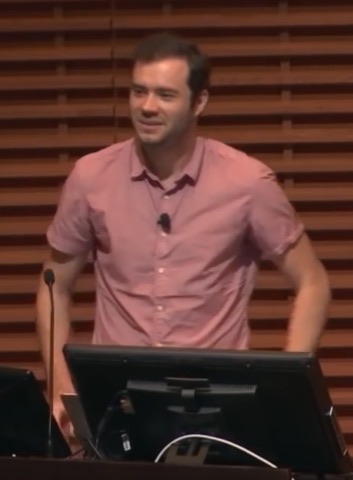
Portrait of Andrej Karpathy
Photo: Gladwin Analytics, CC BY 3.0
Andrej Karpathy
AI researcher and educator
Software is now programmed in plain English. The products that work keep a person in the loop to check and steer what the AI does.
Y Combinator AI Startup School, June 2025
Specify and verifySource ↗
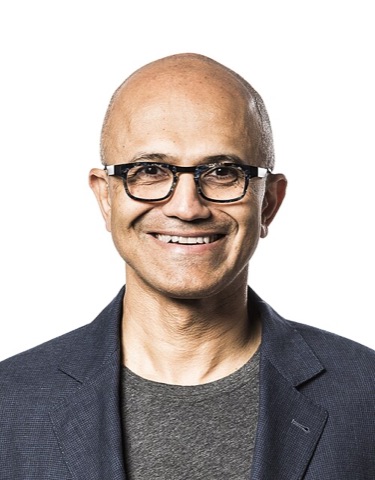
Portrait of Satya Nadella
Photo: Brian Smale and Microsoft, CC BY-SA 4.0
Satya Nadella
Chairman and CEO, Microsoft
AI unbundles jobs into tasks rather than erasing them. Microsoft has committed to giving 20 million Indians AI skills by 2030.
Microsoft AI Tour, India, December 2025
Redesign the processSource ↗
Salil Parekh
CEO and MD, Infosys
Infosys is building a pool of about 6,000 engineers who work inside client teams to put AI into production, and will pay for those skills.
Infosys commentary, 2026
AI implementationSource ↗
K. Krithivasan
CEO and MD, TCS
TCS is still hiring freshers, 14,000 in one quarter, and does not expect AI to shrink its workforce overall. What changes is how the work is delivered.
TCS Q1 FY27 results, July 2026
The rung is changingSource ↗
SpecifyTurn a vague need into a task an agent can run.
BuildConnect the model to real tools, data and systems.
VerifyDecide whether the output is right before anyone acts on it.
OwnAnswer for the result a business can see.

Views are paraphrased from public remarks, with links to the original reporting or recording. These individuals and their organisations are not affiliated with, and do not endorse, InfyAI Academy or Board Infinity. Photographs are used under the licences shown.

03 What we believe

Five beliefs, and what each one rules out.

A principle that rules nothing out is a slogan. These five decide what we teach, how we grade and what we will never say on this site.

1

Build first

Every year ends with something shipped, sold or earned, reviewed by someone who would pay for it.

Exam-led assessment
2

Fast with AI, sound without it

Students direct AI at full speed, and can still explain, debug and defend the work with the tools switched off.

Prompt-and-paste work
3

Own a business outcome

We train for roles accountable for revenue, cost, a customer or a product decision.

Roles that are a queue or a ticket
4

Earn before you graduate

A first rupee in Year 1, a paid sprint for a real business in Year 2, an industry semester after.

Unpaid “experience”
5

Evidence over claims

Every number on this site has a source and a date. Our own outcomes will come with the method.

Guarantees and borrowed proof
04 The model

Technology × business × AI, plus one industry.

The rarest profile in hiring is not the best coder or the best analyst. It is the person who can make AI work inside a real business: a bank’s credit desk, a hospital’s billing team, a software company’s customers.

25–40%

of the degree’s credits, delivered as integrated studios inside the regular on-campus timetable.

Year 2

Students choose one industry and learn its rules, its money and its data.

Your degree

The university’s Board of Studies approves every course, and the university awards the degree. We never co-award.

06 The four-year arc

Maker to professional, one shipped thing at a time.

The B.Tech track runs four years. MBA and BBA tracks run the same arc in two. Each stage is defined by work a reviewer can see, not hours attended.

Y1

Year 1

Maker
  • Start a venture; earn a first rupee
  • Ship your first deployed agent
  • Code with AI; debug without it
  • Twenty customer interviews
Y2

Year 2

Builder
  • A paid consulting sprint for a small business
  • A second agent, with evaluations
  • Choose your industry
  • A Bharat immersion
Y3

Year 3

Operator
  • A shipped feature with a metric
  • A growth experiment with a real budget
  • A week at a capability-centre hub
  • Timed hiring tests
Y4

Year 4

Professional
  • Paid industry semester [where the partner allows]
  • Demo Day
  • Capstone specification and defence
  • A public, verified portfolio
08 Who it is for

Built with three groups of people.

Students and parents

Selected for drive, not for rank.

A reasoning test, a learn-and-apply task and an interview about something you built, however small. No prior coding needed. Spoken English is trained, not screened.

How selection works →
Universities and colleges

A premium track, under your academic authority.

Board-of-Studies-ready courseware with outcome mapping, practitioner co-teaching, assessment infrastructure and an employer network. A Year-1 pilot before any four-year commitment.

How partnership works →
Employers

Shape the graduates you will hire.

Set live briefs, host interns and an industry semester, and judge candidates on work they have shipped and defended, with the verification log attached.

Ways to work with us →
For campus leaders · By invitation

InfyAI Circle: where India’s campuses learn, build and lead with AI.

A closed circle for faculty, academic leaders, placement teams, IQAC and administrators. A monthly Letter from AI, a live session, AI Studio tools for campus work, and peers from institutions across the country.

Request an invitation
Our promise on outcomes

We will publish what happened. We will not promise what hasn’t.

No InfyAI cohort has graduated yet. Until one does, you will not see placement rates or salaries presented as ours. Where we show pay, it is third-party market data with its source, sample size and date.

How we will report outcomes →

  • No placement or salary guarantees, in any form.
  • No “limited seats, apply today” pressure.
  • No other institutions’ results presented as ours.
  • No employer or partner named without written permission.
  • No “future-proof”. We say what you will be able to do, and show it.

Build before you graduate.

The first B.Tech Builders cohort starts with partner universities from [launch term]. Register interest, or talk to us about bringing the track to your campus.